The dream of many nonprofit leaders is to see a local solution grow into a widespread reality. Dr. Nadine Burke Harris’s journey, from pediatrician, nonprofit founder, California Surgeon General to now leading a national network, offers a masterclass in leveraging local roots, innovation, policy influence, unwavering focus, and the necessity of joy in leadership.
It started with Dr. Burke Harris working as a pediatrician in Bayview-Hunters Point, a San Francisco neighborhood where she saw compounding health impacts of childhood traumas on patients, most of whom were Black and brown.
She founded the Center for Youth Wellness in 2011 because “the harm caused by adverse childhood experiences is avoidable, and the effects are treatable, if diagnosed,” said Dr. Burke Harris. “Our kids deserve better. It’s time for our care to catch up to the science.”

“The harm caused by adverse childhood experiences is avoidable, and the effects are treatable, if diagnosed,” said Dr. Burke Harris. “Our kids deserve better. It’s time for our care to catch up to the science.”
Her strategy centered on two innovations: universal screening and coordinated care. She developed a simple screening tool that pediatricians can use in checkups to assess for risk of developing a dysregulated stress response (toxic stress). Patients screening positively for serious traumas were referred to the Center for evidence-based interventions by a team of physicians, counselors, and specialists.
The Catalyst: From Clinical Practice to Policy
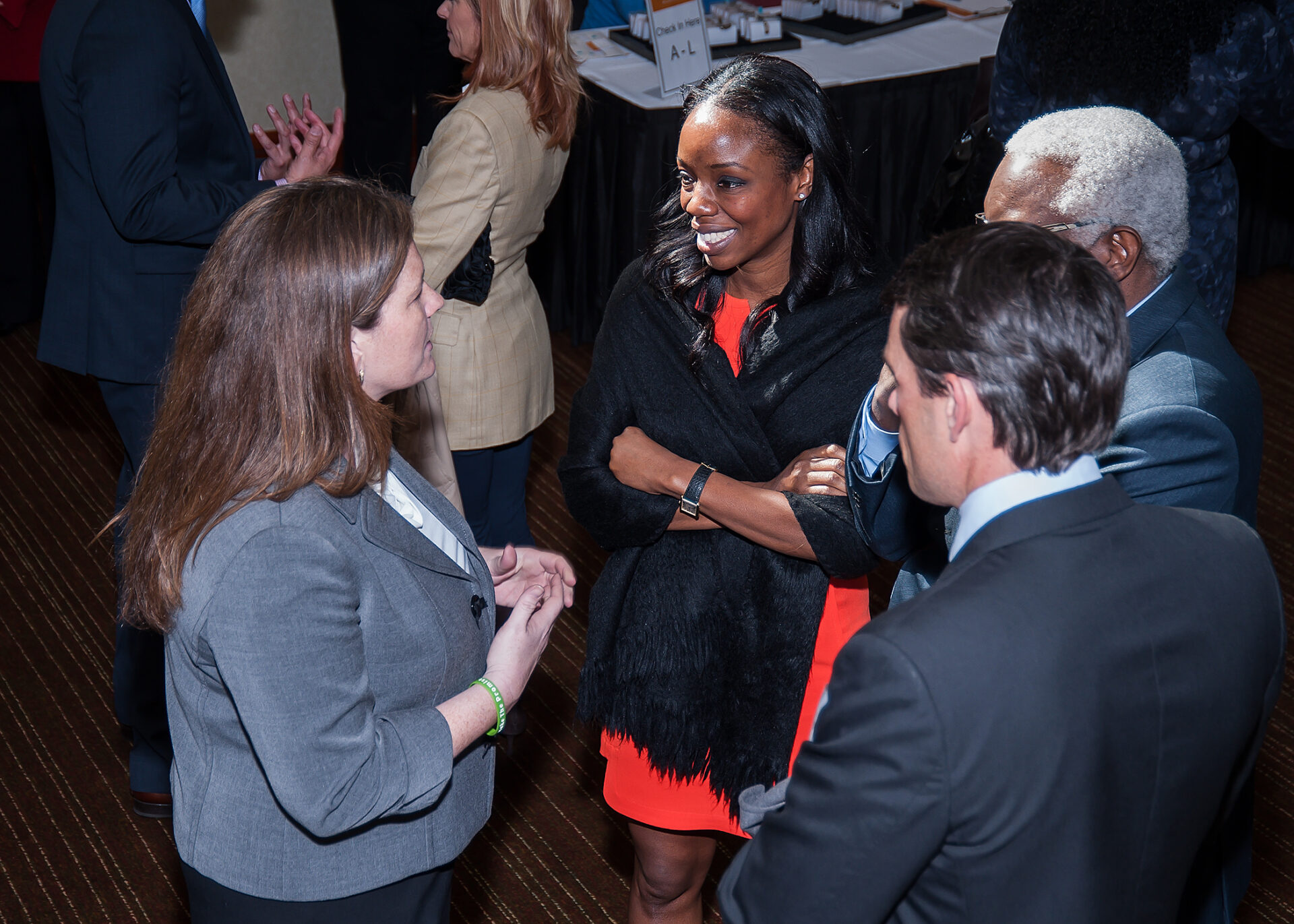
In 2014, Dr. Burke Harris and her colleague, Chief Operating Officer Suzy Loftus, received The James Irvine Foundation Leadership Award. It was a pivotal point; the Center for Youth Wellness’s clinical model had matured enough to then direct support for research and more advocacy work.
“The Center’s work was ultimately implemented on a statewide level — kind of like a startup having an IPO,” said Dr. Burke Harris, noting that the Award acted as a bridge between clinical expertise and policy influence. “It was very meaningful for the organization, particularly as it oriented us more toward policy. Before, we hadn’t been thinking about policy the way we were after the Award event, where we were on the California Senate floor, shaking hands with policymakers.”
“It was very meaningful for the organization, particularly as it oriented us more toward policy. Before, we hadn’t been thinking about policy the way we were after the Award event, where we were on the California Senate floor, shaking hands with policymakers.”
This exposure transformed the Center from a local provider into a sought-after authority. Legislators began to reach out to the team as experts, and Dr. Burke Harris was appointed to a key advisory committee. This momentum, bolstered by her viral TED Talk in 2014, paved the way for a state law authorizing Medi-Cal reimbursement for trauma screenings and, eventually, her historic appointment as California’s first Surgeon General in 2019.
Lessons from the Public Sector: The Power of Focus
Transitioning from a nonprofit founder to a high-profile — and brand new — public role required Dr. Burke Harris to reflect on what she had learned about leadership: focusing on a few things with absolute precision.
“Keep your eyes on the prize,” she advises. “One thing I learned before my role in government, and experienced in a huge way there, was being narrowly focused enough to get something done. Be clear about what you’re there to do, say no so you can say yes well.”
“One thing I learned before my role in government, and experienced in a huge way there, was being narrowly focused enough to get something done. Be clear about what you’re there to do, say no so you can say yes well.”
Confronted with endless opinions on what the state’s first Surgeon General should prioritize, she anchored her office in three pillars: early childhood, racial equity, and ACEs (Adverse Childhood Experiences that cause toxic stress).
Even when in other seats — from Alzheimer’s commissions to the Master Plan on Aging — she viewed every task through the lens of those focus areas. This discipline, she says, allowed for “actual systems transformation” in public education and precision medicine that remains visible today.
The Next Chapter: Scaling the Blueprint
Dr. Burke Harris completed her tenure as California Surgeon General in 2022. A year earlier, the Center for Youth Wellness had merged with a like-minded nonprofit, Safe & Sound, and Dr. Burke Harris set her sights on broader impact.
Her ACE Resource Network is taking the “California blueprint” nationwide. Lessons she learned as Surgeon General are that “policy is not enough” and true transformation requires the “General” mindset: “marshalling the resources, organizing the troops, communications, and deploying a coordinated set of tools and skillsets.”
That’s top of mind as the ACE Resource Network launches a Medicaid Learning Collaborative with six states — California, Georgia, Hawaii, New York, Tennessee, and Utah — to help regions learn from one another and build the policy infrastructure to treat childhood trauma as a public health priority.
Advice for the Sector, Leaders
Looking back on her journey through the private, nonprofit, and public sectors, Dr. Burke Harris has advice for philanthropy as another key contributor to social change. She challenges funders to act more like venture capitalists by providing clearer pathways for “seed” innovation and more support in creating the infrastructure for success and sustainability.
For leaders themselves, her message remains one of grounded inspiration: Engage in the difficulty of “heart-led work but protect the reserves that allow you to remain flexible and visionary.”
Navigating the dynamic and often exhausting environments of the social sector requires, according to Dr. Burke Harris, “self-care, which does not get enough airtime.” She argues that leaders must invest not just in resilience but also in “joy, creativity, and ingenuity” to remain connected to their purpose. “If our cup is empty, it comes across in our leadership. If we’re running an organization, the efficacy is about your teams, your role as a leader, and ability to set a vision and inspire your team.”

Engage in the difficulty of “heart-led work but protect the reserves that allow you to remain flexible and visionary.”